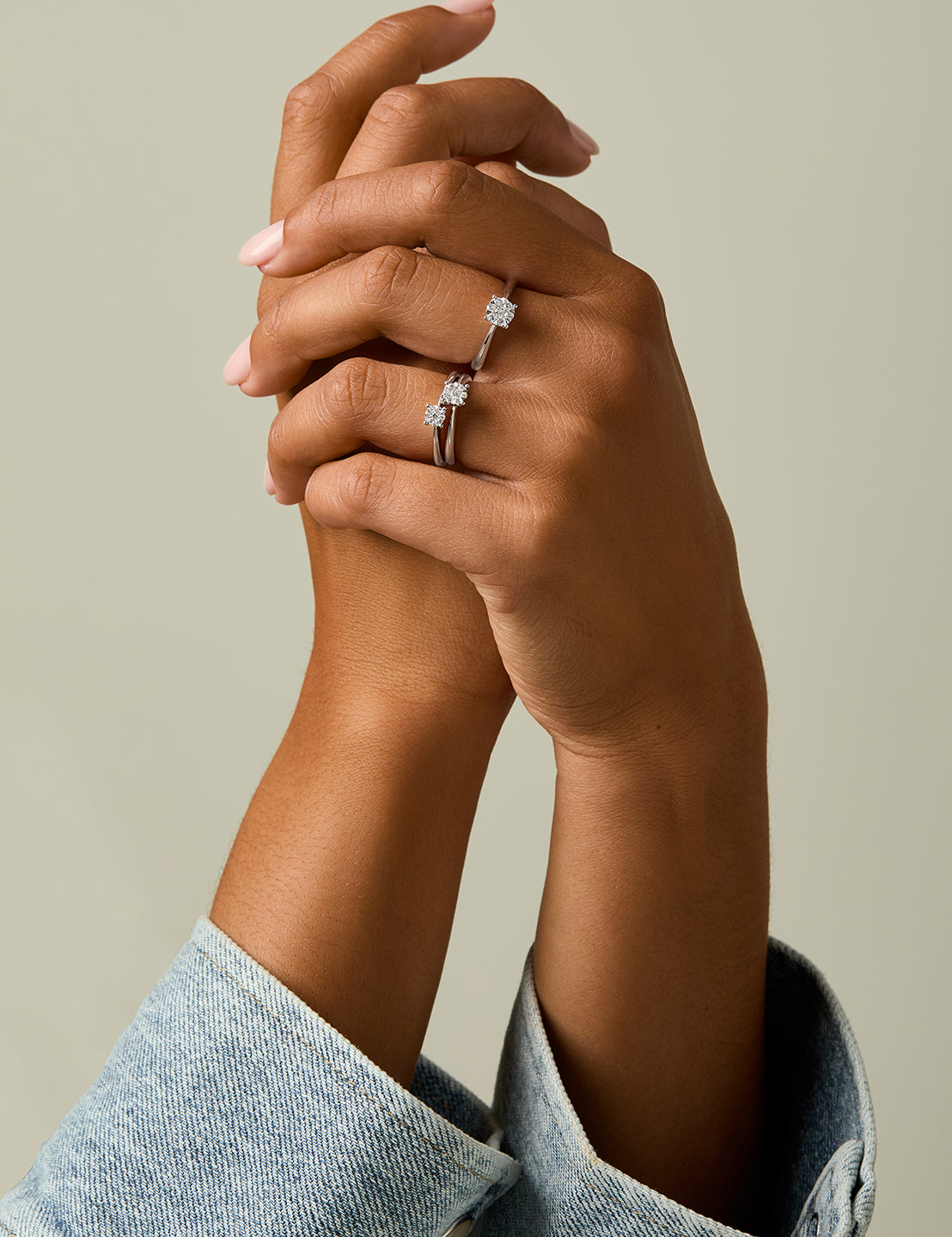

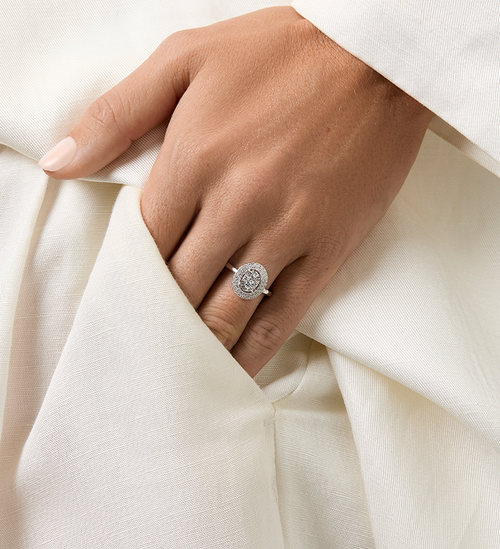




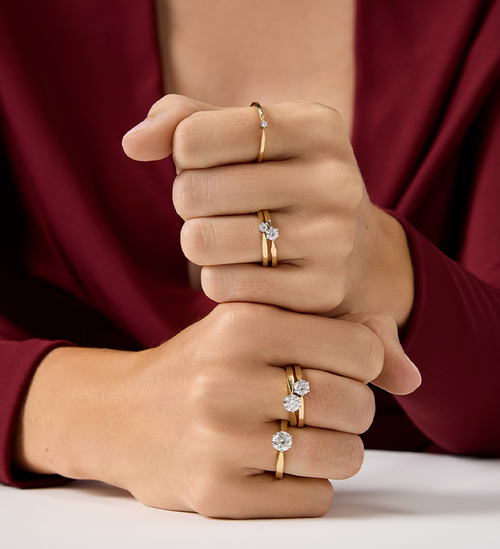
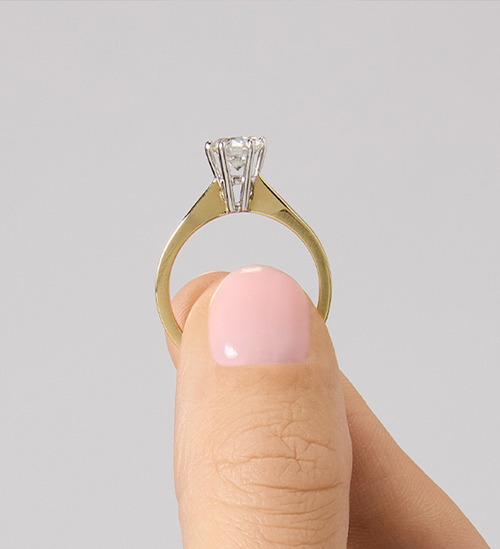
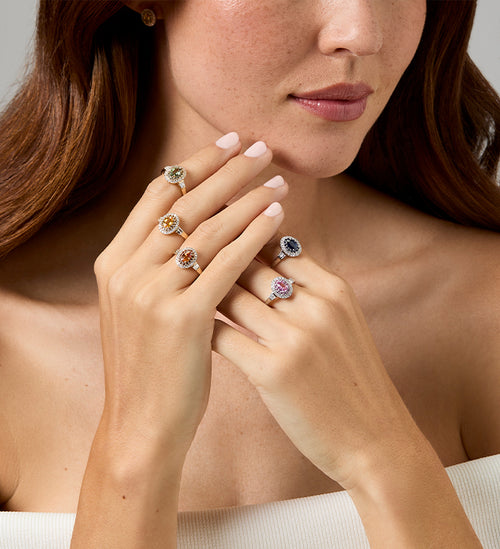




Engagement rings and wedding rings are more than just sparkling jewelry. They symbolize the love and commitment in your relationship. In Western cultures, the engagement ring is traditionally worn on the ring finger. There is a reason behind this. The “vena amoris”, also known as the vein of love, is the vein located in the left ring finger that leads directly to the heart. This means your ring is directly connected to the heart. However, the way both engagement and wedding rings are worn varies greatly and is determined by traditions, religious beliefs, cultural customs, and personal preference. Would you like to read more about wedding rings? Then read our ultimate guide: Everything about wedding rings here.
Which hand does the wedding ring belong on?
There is no universal answer to which hand is suitable for the wedding ring. In the Netherlands, the wedding ring is often worn on the right hand, while in many other countries, such as the US and the UK, the left hand is customary. The choice is often associated with cultural and religious traditions, but ultimately personal preference is what matters most. Whether you choose left or right, Diamond Point offers an extensive collection of wedding rings that perfectly suit your style. View our wedding rings. More tips and inspiration for engagement rings and wedding rings can be found on our wedding page.
Cultural influences on wearing engagement rings and wedding rings
Culture and religion play a major role in the decision of which finger the wedding ring is worn on. Here are the most common traditions by region:
Western Europe and the Netherlands
In the Netherlands, the choice is often determined by religion:
- Catholics traditionally wear the wedding ring on the left hand.
- Protestants usually wear the ring on the right hand.
- In countries such as the UK and the US, the left hand is the standard, because people used to believe that the Vena Amoris (vein of love) ran directly from the left ring finger to the heart.
Eastern Europe and Scandinavia
In countries such as Poland, Russia, and Norway, the right hand is the norm for both the engagement ring and the wedding ring. Here, the right hand is often associated with decisiveness, loyalty, and authority.
Latin America and India
In Latin America, the right hand is customary. In India, it varies by region and religion, although the left hand was previously considered “unclean”; nowadays both hands are accepted there.